Pet Rodeo

OVERVIEW

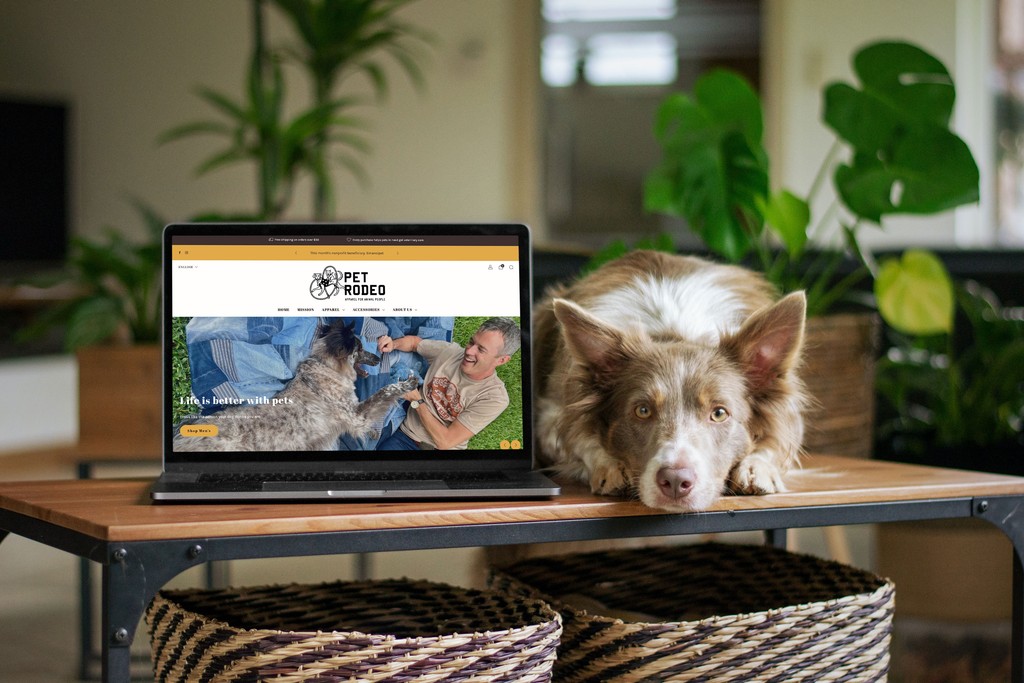
I redesigned PetRodeo.com, a Shopify store that sells animal-themed apparel and donates a portion of every sale to nonprofit veterinary care. I ran user research to understand where to focus, advised the client on best practices for photography and copy, and refreshed the entire site. This was more than a theme change. The UX and UI improvements helped drive 49 percent more sales, a 44 percent increase in returning customers, and a 35 percent increase in order value.
TIMELINE

TIMELINE

4 Weeks

4 Weeks

ROLE

SOLO DESIGNER
RESEARCH, UX, UI, TESTING

PROJECT TYPE

PROJECT TYPE

E-COMMERCE UX/UI REDESIGN (SHOPIFY)

About the project

A good cause, but lackluster implementation

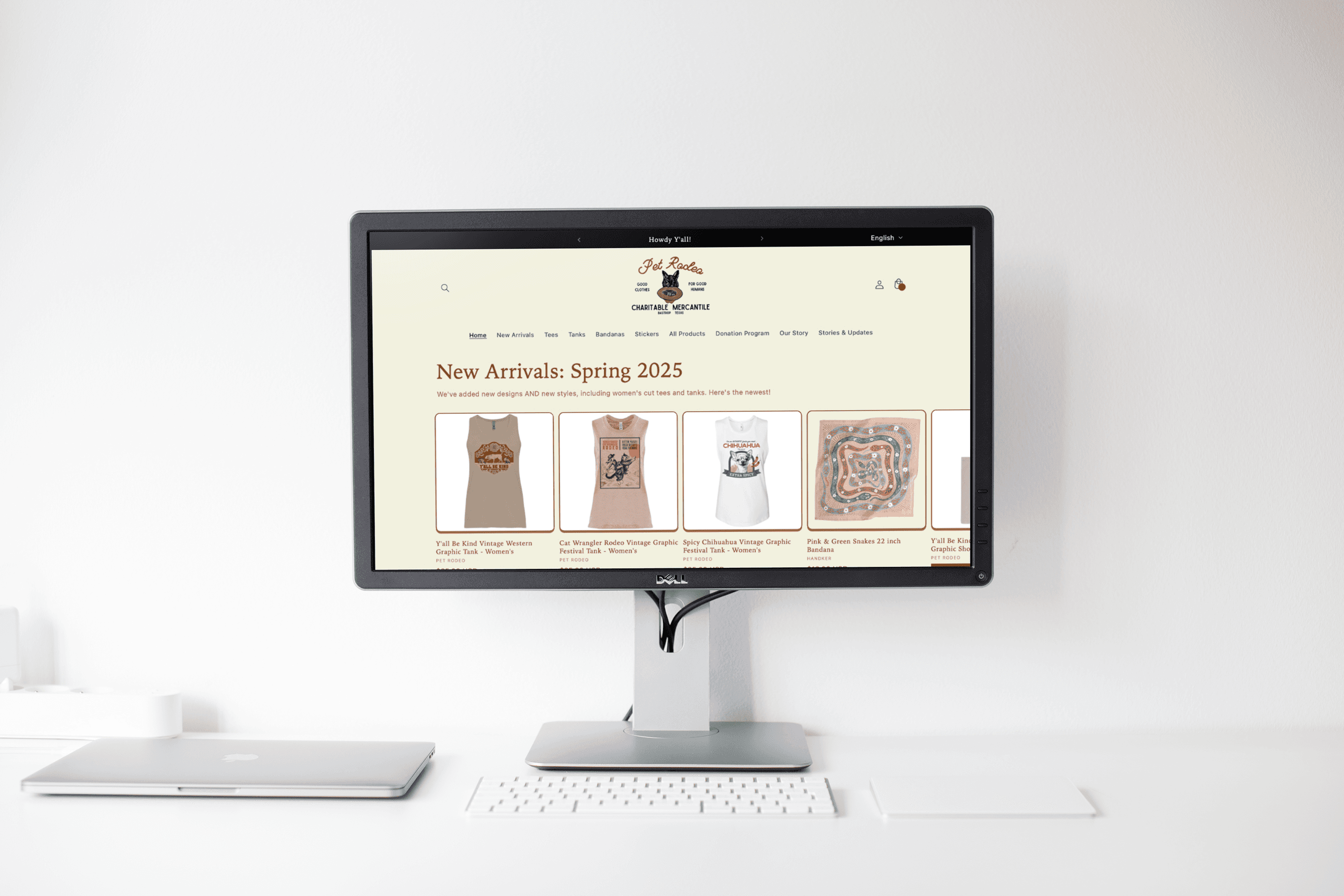
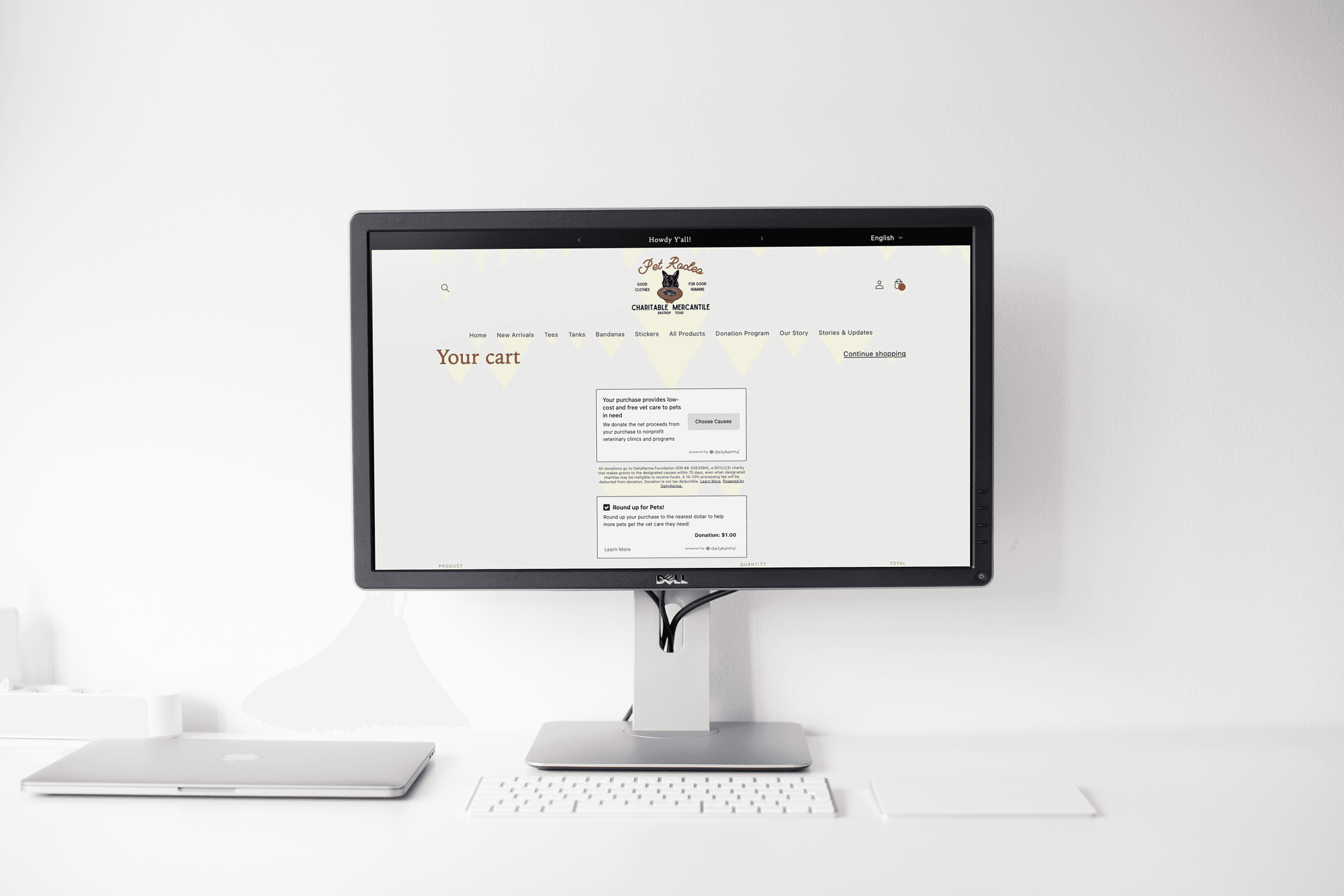
Pet Rodeo was my client’s first attempt at a Shopify store, and while she had a great mission, the execution fell short. The donation messaging was unclear, the branding felt inconsistent, and basic e-commerce patterns like filtering, hierarchy, and product photography were missing or confusing. The result was a site that made it hard for shoppers to trust the brand, understand their impact, or confidently buy anything.

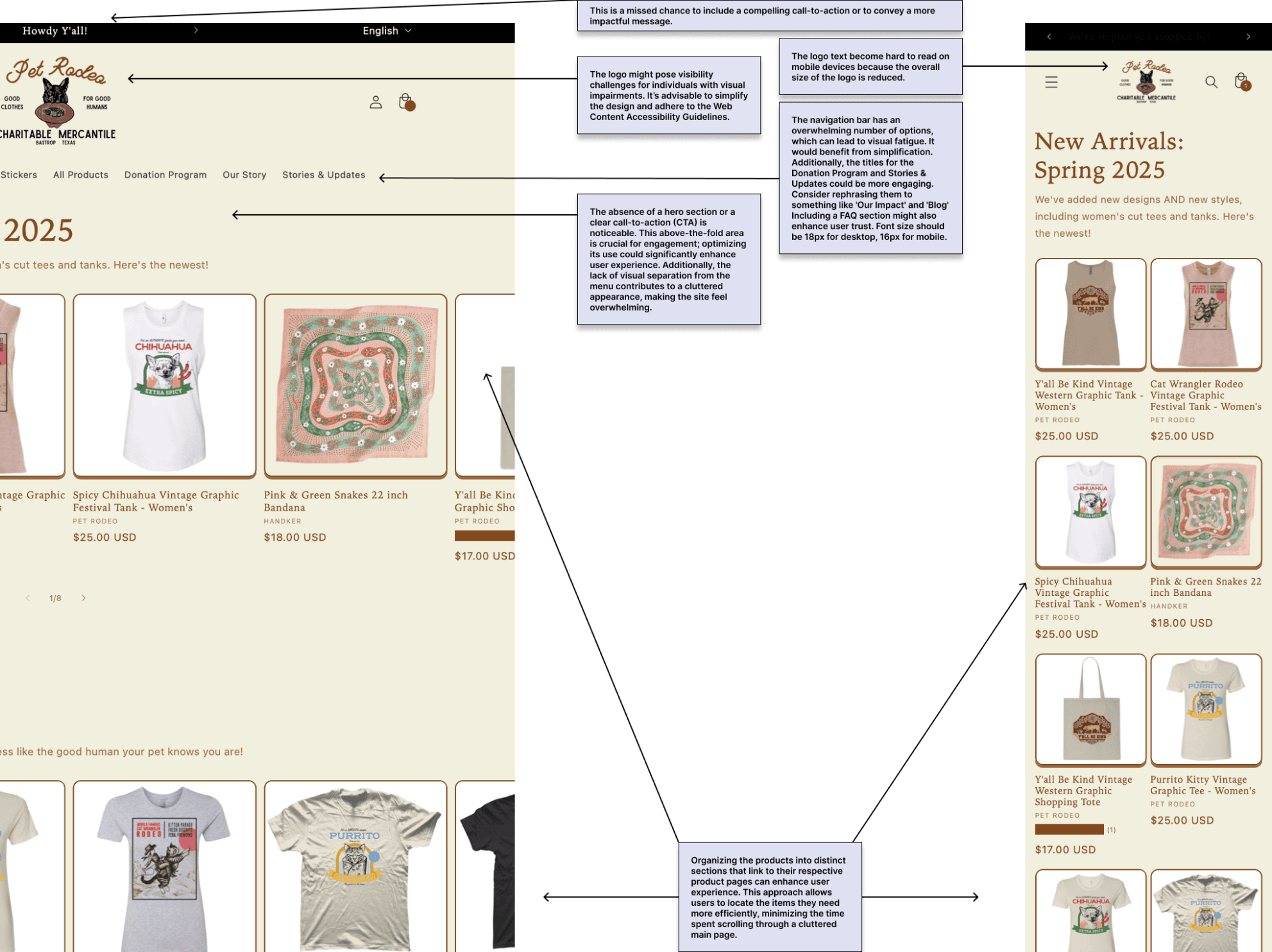
THE OLD HOMEPAGE: NO HERO, NO CTA

CLUTTERED CHECKOUT

A clearer, more trustworthy experience

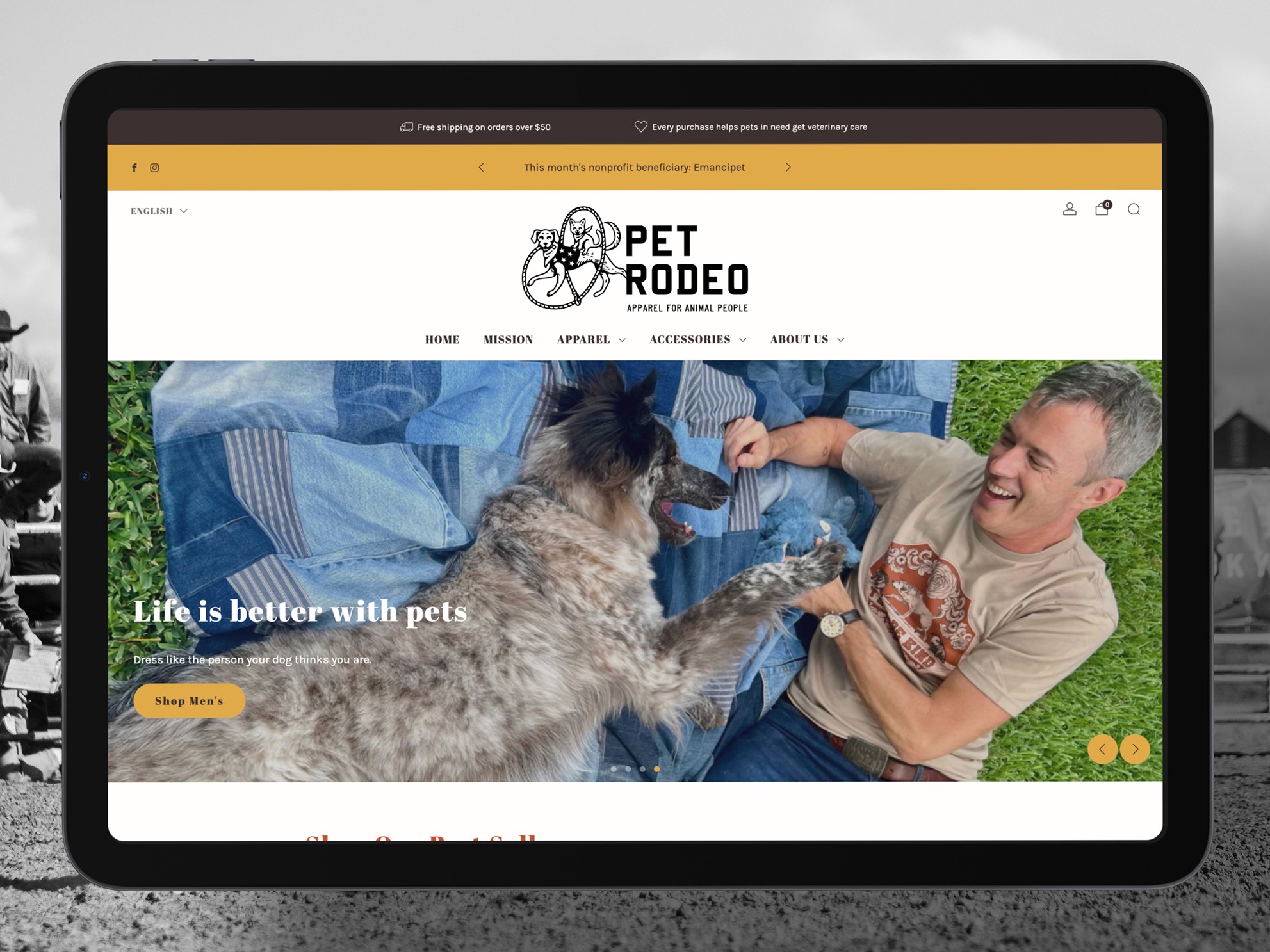
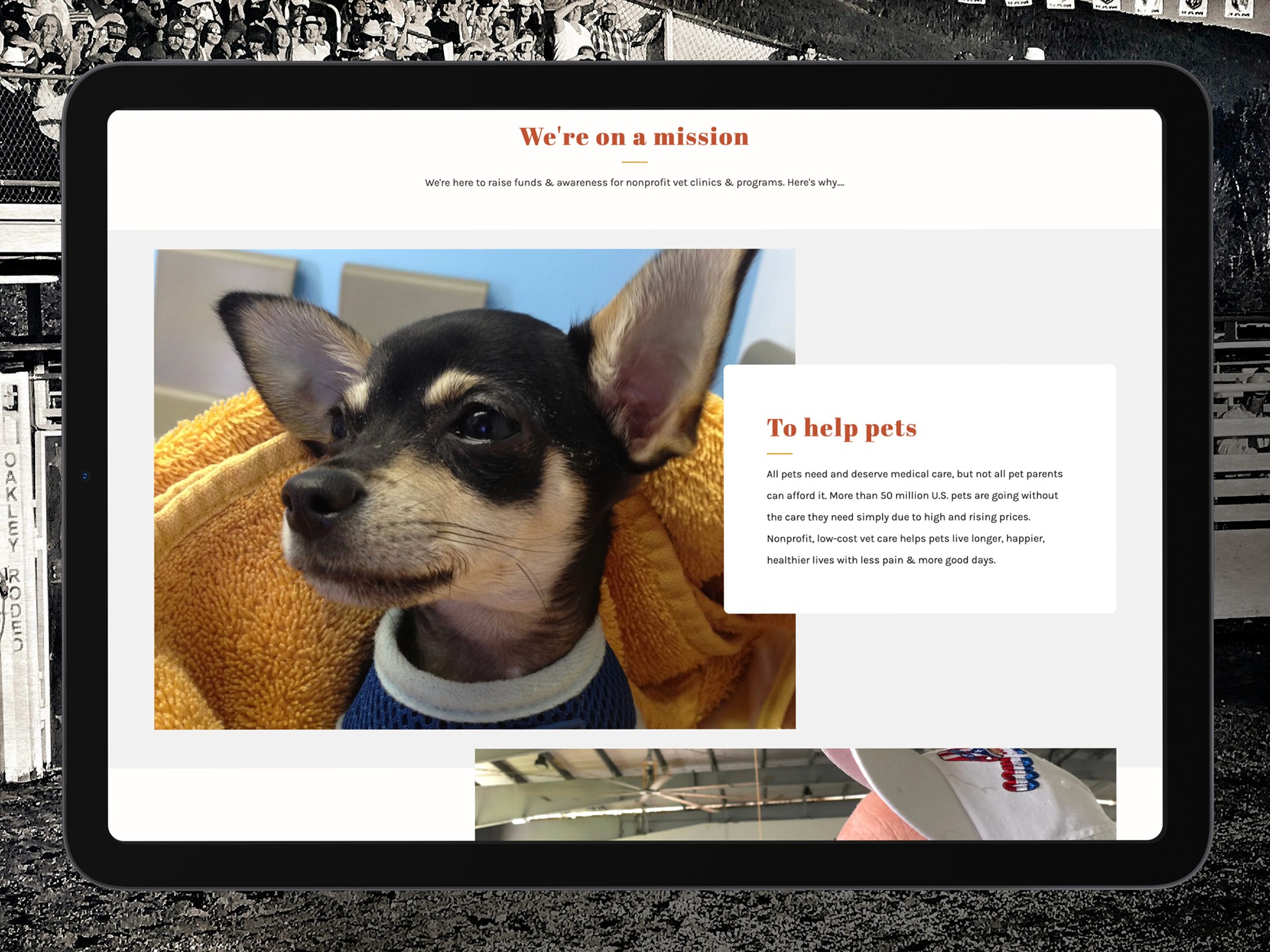
The mission, supporting low-cost veterinary care, was the heart of the brand, but the original site barely communicated it. To fix that, I focused the redesign on clarity and trust. We brought the mission forward, strengthened the branding, and rebuilt the shopping flow around what customers actually needed to feel confident. The result was a cleaner, more consistent experience that made the purpose clear and helped shoppers understand the impact of their purchase while making it easier to buy.

CLEAN UPDATED SITE

MAKE THE MISSION THE HERO

RESPONSIVE

USER-CENTERED

My Process

My design thinking

Because Pet Rodeo was a client-managed Shopify site, I wanted the redesign to help in the long term, not just look better in the short term. I started by identifying what was broken and why. My problem statement became the foundation for the project: 

Pet Rodeo’s mission resonated, but the website didn’t. An unclear mission, inconsistent branding, poor user experience left users uncertain about both purchases and impact, costing trust, conversions, and support for low-cost veterinary care.

With that clarity, I moved through research, testing, visual design, and implementation to rebuild the experience in a way the client could maintain going forward.

Diagnose the problems

The first step was a full heuristic review of the existing site. I documented issues visually so the client could clearly see what was failing: unclear hierarchy, weak CTAs, confusing navigation, and a checkout experience full of friction. I paired this with research from NNG and other e-commerce UX guidelines to give the client best-practice references they could rely on even after the project ended.

See the Pet Rodeo website best practices.

Diagnose the problems

The first step was a full heuristic review of the existing site. I documented issues visually so the client could clearly see what was failing: unclear hierarchy, weak CTAs, confusing navigation, and a checkout experience full of friction. I paired this with research from NNG and other e-commerce UX guidelines to give the client best-practice references they could rely on even after the project ended.

See the Pet Rodeo website best practices.

Diagnose the problems

The first step was a full heuristic review of the existing site. I documented issues visually so the client could clearly see what was failing: unclear hierarchy, weak CTAs, confusing navigation, and a checkout experience full of friction. I paired this with research from NNG and other e-commerce UX guidelines to give the client best-practice references they could rely on even after the project ended.

See the Pet Rodeo website best practices.

Challenges and solutions

I started the redesign with low and high-fidelity prototypes in Figma, exploring what the ideal experience could look like. But turning those designs into a fully custom Shopify build was beyond my experience and my client’s budget, which meant I needed a more realistic and sustainable path forward.

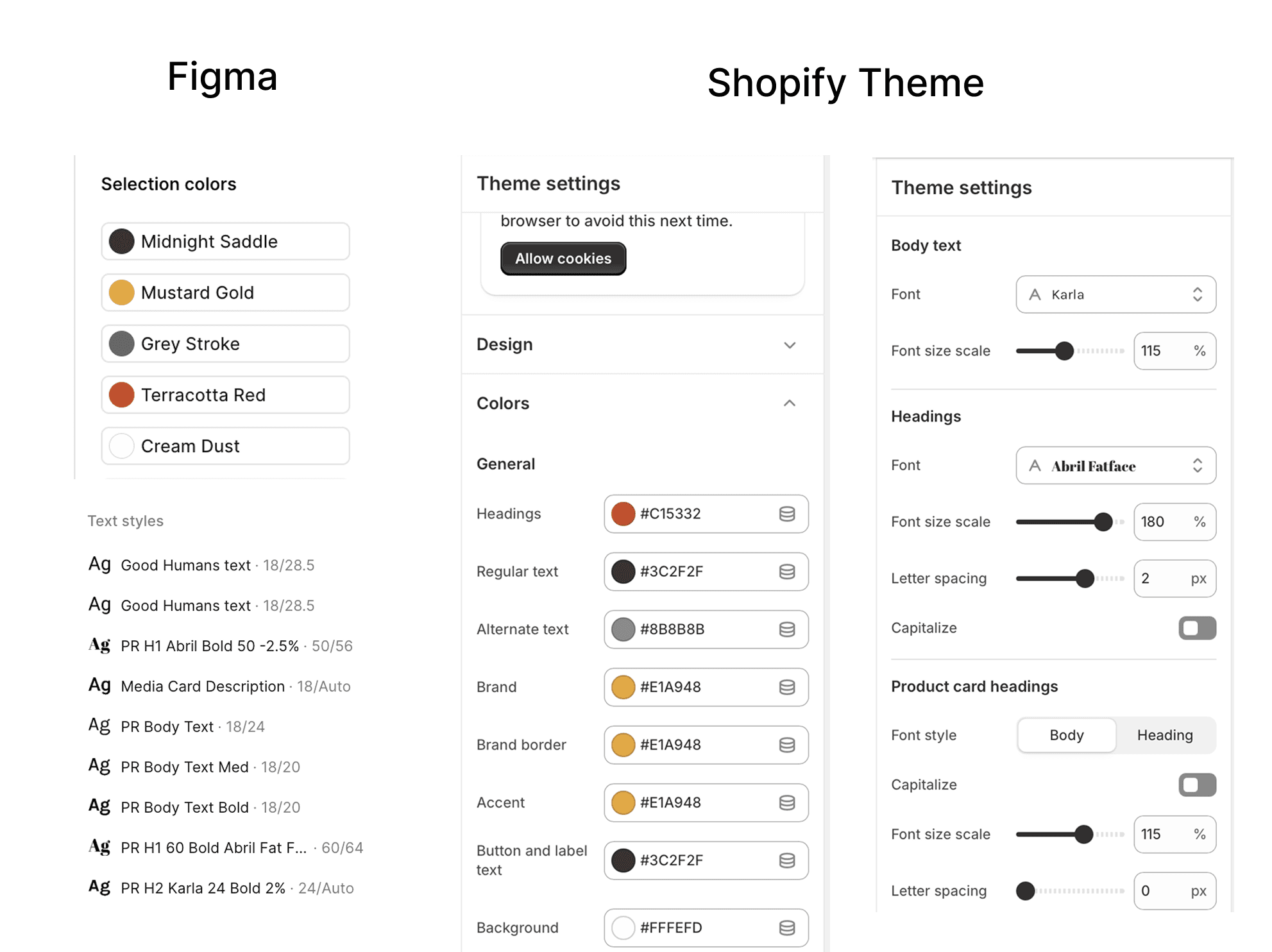
Instead, we chose a theme that supported the design direction and customized it with the new color palette, typography, and messaging. We incorporated all the lessons and feedback into the new theme and found once we focused on transparency, better visuals, and a smoother buying path, users responded immediately and the store saw meaningful gains.

SAME BASE, NEW PLATFORM

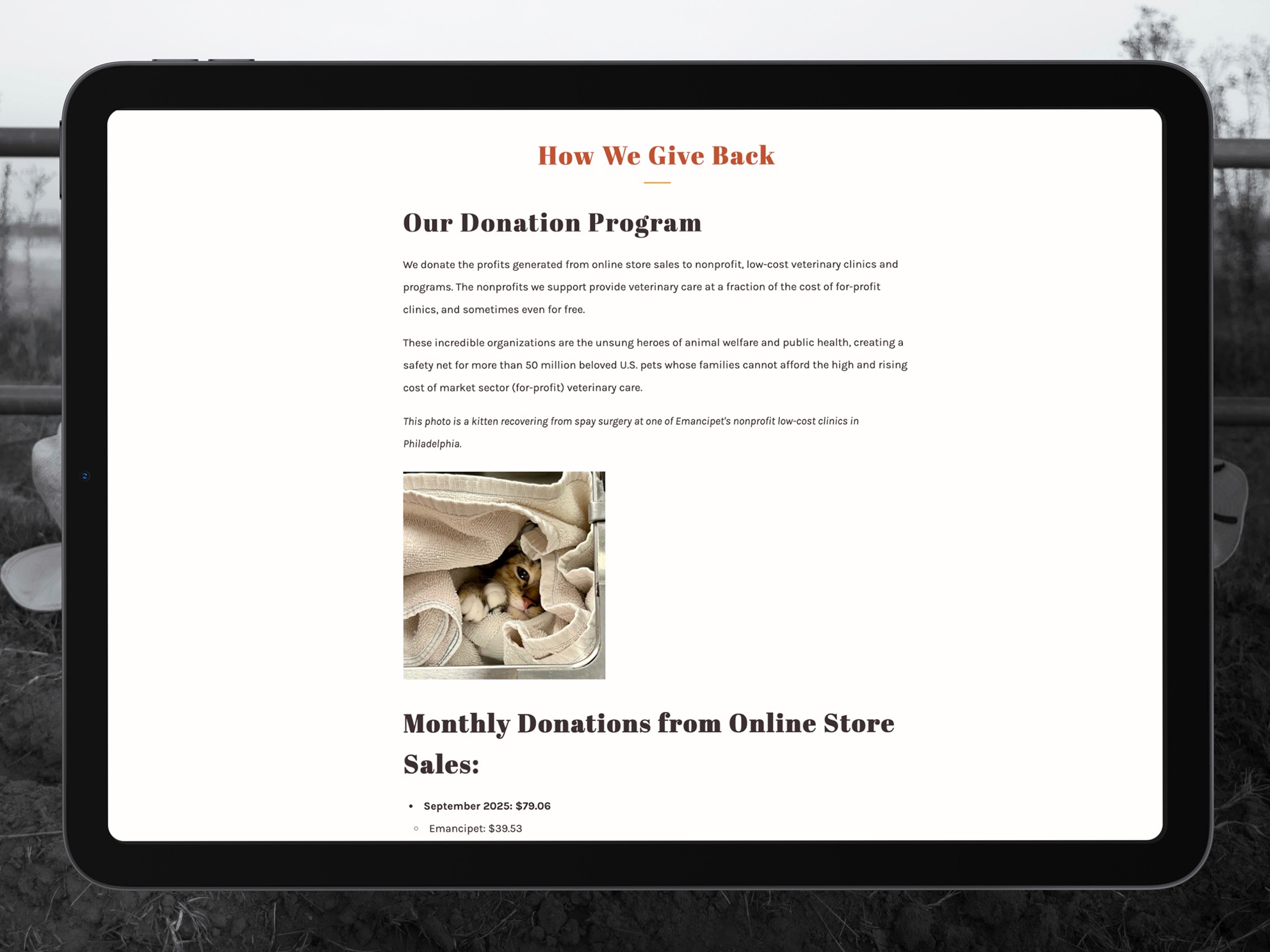
TRANSPARENT MISSION

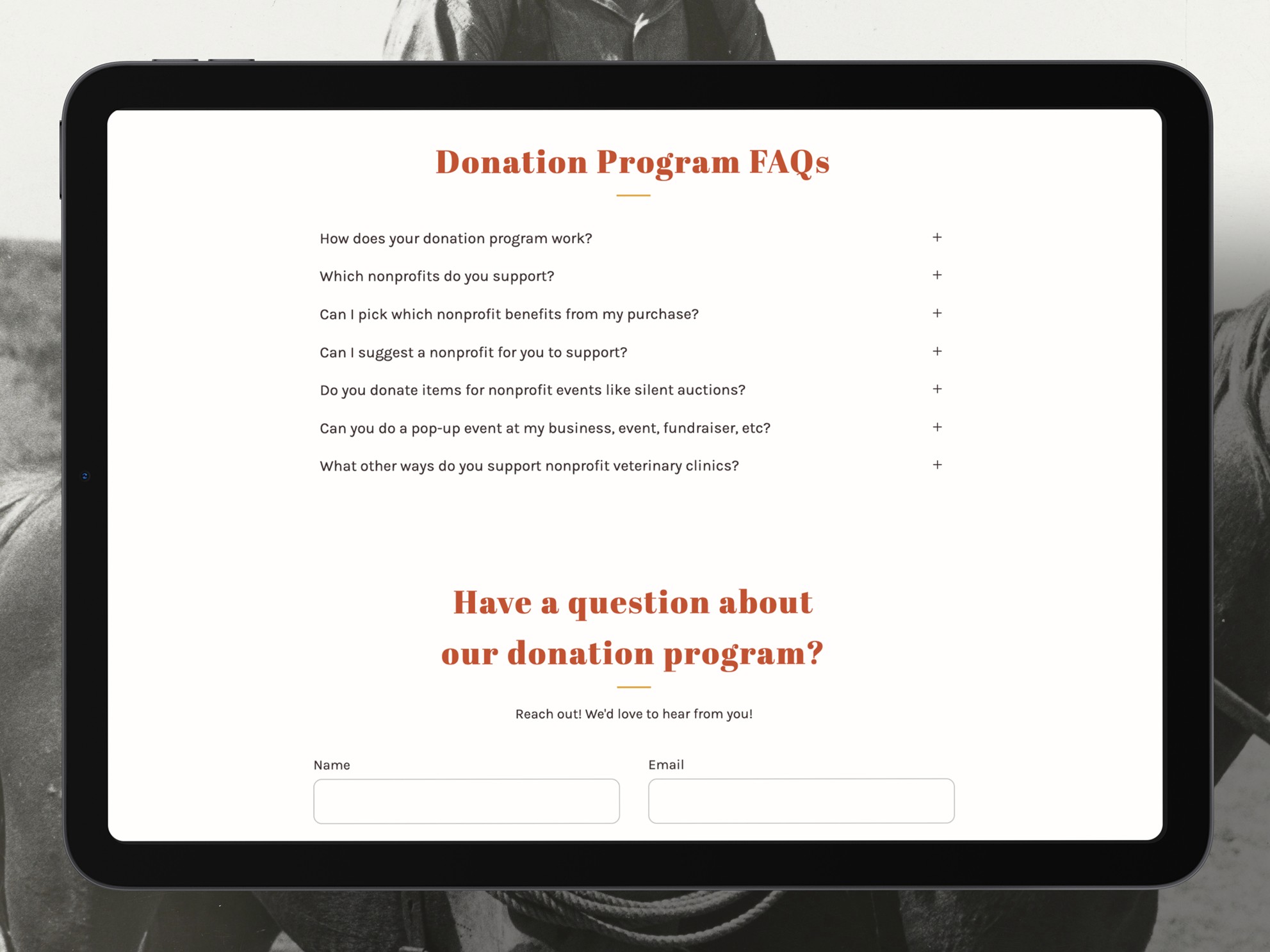
ALL YOUR QUESTIONS ANSWERED

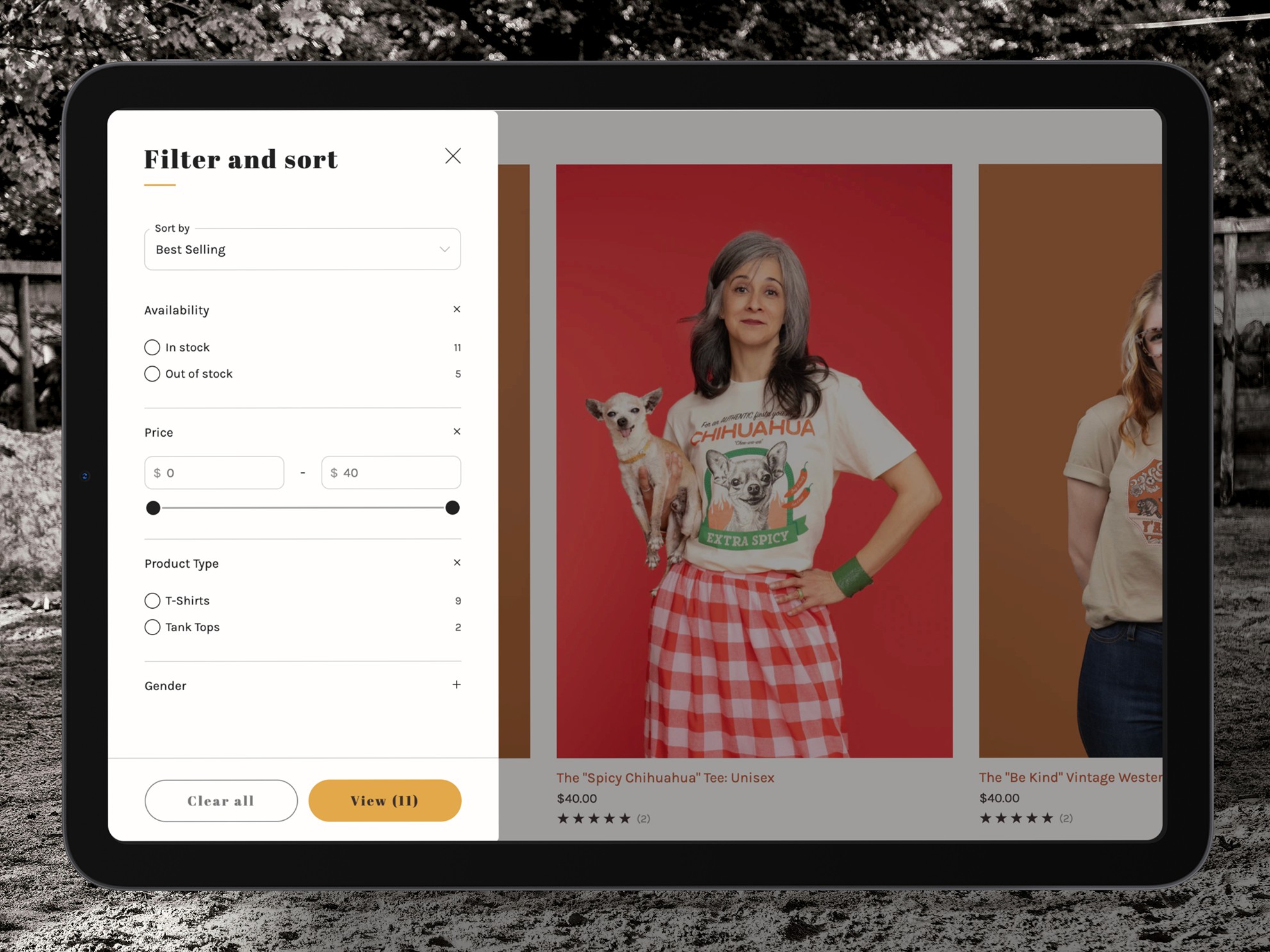
E-COMMERCE BEST PRACTICES

Results

↑49%

Gross sales

↑44%

Return customers

↑35%

Order value

↑59%

Sessions

See for yourself

Smooth Scroll
This will hide itself!
Smooth Scroll
This will hide itself!
Smooth Scroll
This will hide itself!